


Every woman of the fairer sex wants to stay beautiful and in shape.Not everyone is blessed by nature with a slim and feminine figure.This means that some girls will have to make a lot of effort to achieve the ideal result.One of the most effective methods in the fight for slimness is the Japanese diet.It has already gained a large number of fans, and in Russia it is popular because it does not require large sums of money and lasts only two weeks.And the result after it is stunning!

Basic information about the Japanese diet
Before you start losing weight, you should find out as much information as possible about the chosen method.Below you will learn the basic rules of the Japanese diet.So, if you are ready to show endurance, will and you are hardy enough, then we suggest that you familiarize yourself with the basic principles of the diet.
- Duration: exactly 2 weeks or 14 days.
- The result is excellent, the diet helps to get rid of 5 to 8 kg.Unlike monodiets, the effect of Japanese diets lasts for quite a long time.
- The price is low.
- You should resort to this weight loss method no more than twice a year.
- The diet is a balanced low-calorie, low-carbohydrate protein diet.
- The Japanese diet for 14 days is quite strict and therefore requires special psychological preparation.Prepare ahead of time to avoid diet failure.
Contraindications:
The Japanese diet has its contraindications;pregnant and lactating women, people with diseases of the gastrointestinal tract, kidneys, liver and heart diseases should not resort to it.Before switching to such a diet, it is best to consult a doctor to avoid negative consequences.
Also remember that with rapid weight loss, stretch marks form on the skin.To avoid their appearance, experts recommend using modeling cream during diets.However, you should approach the choice of this cosmetic product very carefully.The fine print that most cosmetic manufacturers use to print their ingredients can hide ingredients such as mineral oils, animal fats and parabens.The latter are particularly dangerous for the body, as they tend to accumulate in it and cause serious health problems.Experts recommend using only natural cosmetics.
Basic conditions
In order to achieve the desired effect, namely to lose extra pounds, you must:
- Follow the diet menu, do not deviate from it and eat strictly in accordance with it.
- Don't mix up the days.
- Drink plenty of fluids, 1.5 liters of boiled or clean water without gas.
- Completely eliminate salt and sugar, sweets, alcohol and flour from your diet.
The creators of the diet promise that the lost pounds will not return to the woman for several years.Isn't that great motivation?You have to last exactly 2 weeks on a strict diet, but 2 years after it you will look great!Important: the Japanese diet includes coffee, you will have to drink it almost every day.That is why people who have problems with blood pressure should undergo such a diet with great care.This diet is not completely suitable for them.
What will be on the plate during these 14 days?
As mentioned above, the Japanese salt-free diet is very strict.Sweets and flour are completely excluded, but there will be other healthy and tasty foods on your plate.The good thing is that you don't have to think about what to eat - you just have to strictly follow the menu.A mandatory rule is to drink one and a half liters of water per day.
Japanese diet for 14 days menu:
1 day:
- For breakfast- one cup of natural coffee without sugar.
- For lunch- salad with boiled cabbage, drizzled with olive oil, plus two boiled eggs.You can wash it down with tomato juice without salt.
- For dinner— steamed fish fillet (about 250 g).
Day 2:
- For breakfast- coffee and rye bread crackers.
- For lunch— fish in any form, 250 g. Salad of cabbage and vegetables with vegetable oil.
- For dinner- boiled beef (100 g) plus kefir.
Day 3:
- For breakfast- coffee and crackers.
- For lunch- large zucchini, cut into slices and fried in a little oil.
- For dinner- two boiled eggs plus boiled beef (200 g).Fresh cabbage salad in vegetable oil.
Day 4:
- For breakfast- coffee.
- For lunch- a raw egg, a few carrots with vegetable oil, a little hard cheese (15 g).
- For dinner- any fruits in small quantities.Exceptions are grapes, mangoes and bananas.
Day 5:
- For breakfast- raw carrot salad with lemon juice.
- For lunch— 250 g of fish fillet in any shape plus tomato juice.
- For dinner- fruits other than banana, mango and grapes.
Day 6:
- For breakfast- coffee.
- For lunch- half a small boiled chicken or chicken fillet.Cabbage and carrot salad with olive oil.
- For dinner- two boiled eggs, carrot salad.
Day 7:
- For breakfast- green tea without sugar.
- For lunch- boiled beef about 200 g, small amounts of fruit.
- For dinner- each of the previous days except the third day.
Day 8:
- For breakfast:carrot salad with lemon juice.
- For lunch- fish plus tomato juice.
- For dinner- two boiled eggs.
Day 9:
- For breakfast- coffee.
- For lunch— 250 stewed fish fillets plus tomato juice.
- For dinner- fruits.
Day 10:
- For breakfast- green tea.
- For lunch- raw egg and carrot salad, hard cheese 15g.
- For dinner— boiled veal 200 g, fresh cabbage salad.
Day 11:
- For breakfast- coffee plus crackers.
- For lunch- fish and vegetable salad.
- For dinner- 100 g of boiled meat and kefir.
Day 12:
- For breakfast- coffee and crackers.
- For lunch- fish and vegetables.
- For dinner- boiled meat and kefir.
Day 13:
- For breakfast- coffee.
- For lunch- salad of boiled cabbage and olive oil, 2 boiled eggs.Tomato juice.
- For dinner- 250 g of any fish.
Day 14:
- For breakfast- coffee.
- For lunch- boiled or stewed fish, fresh cabbage salad.
- For dinner- 200 g of beef and kefir.
When preparing food, you cannot use salt;it is a special protein-free salt-free diet.And don't forget to drink plenty of fluids throughout the day.This is the diet you should have if you decide to lose weight with the Japanese diet.This is a menu for Europeans.
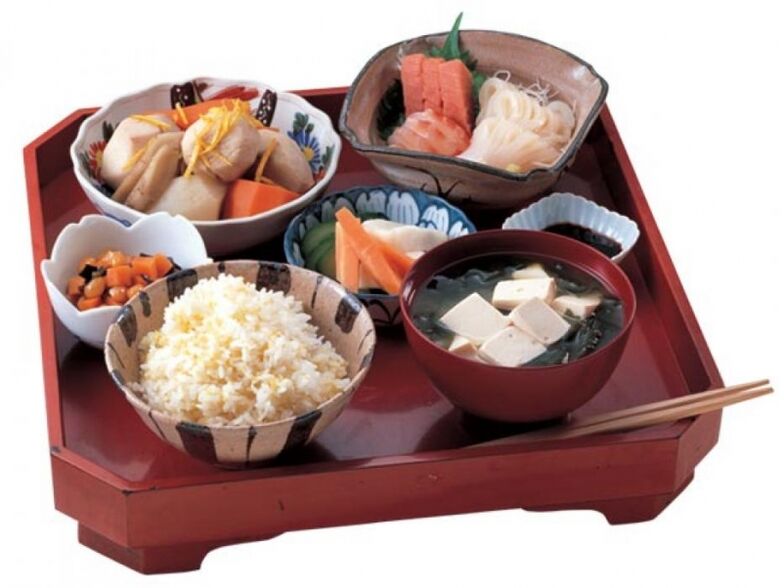
And the Japanese themselves offer another type of diet in which the following foods are allowed:
- 400 g of rice.
- 200 g of fruit.
- Beans - 60g.
- 120 g of fish fillet.
- Milk 100g.
- One egg.
- A few spoons of sugar.
- Vegetables 250g.
What do doctors think about the Japanese diet?
This low-calorie, low-carbohydrate diet is considered strict and strict, consuming less than 1200 kcal per day.The body begins to experience a kind of stress - metabolism slows down and breakdown of food is possible.However, the Japanese salt-free diet is the most balanced among other diets.Some experts recommend taking a complex of vitamins while losing weight.

Preparation for the Japanese diet
Before the beginning of a difficult two weeks, you need to prepare not only psychologically.On the eve of the diet, make a light dinner - a small portion of rice, some vegetable salad with Chinese cabbage and radishes or cucumbers and tomatoes.Do not salt it, but flavor it with olive oil and a drop of vinegar.We recommend that you purchase special chopsticks;your mood will immediately improve and you will feel like a real Japanese woman.At the same time, learn to feed yourself with their help.
What to buy for a nutritional diet
Since you will have a different diet during these two weeks, you will need to go to the store the day before.We will help you make a list of the necessary products:
- Natural coffee of the highest quality, can be beans or ground - 1 package.
- Fresh eggs - 20 pcs.
- Fish fillet - 2 kg.
- Unflavored green tea - 1 package.
- Veal - 1 kg.
- Chicken fillet - 1 kg.
- olive oil.
- Vegetable oil.
- Carrots - 2 kg.
- Fresh white cabbage - a few pieces.
- Zucchini - 1 kg.
- Fruits - 1 kg.
- Tomato juice - 2 l.
- Kefir.
- A lemon.
Good luck in the fight against extra pounds!We hope you enjoy the Japanese diet.